Learning a language means, to a greater or lesser extent, learning culture. It’s much more than the “local color”: it’s about ways of speaking that belong to one region (and not to others); for example, in many cases people prefer certain expressions they feel are “natural” over others. That’s why it’s impossible to really learn a language by focusing only on grammar (I’m not saying grammar isn’t important — I’m a big fan).
This also applies, of course, if you’re learning Argentine Spanish.
I’ll share a colloquial expression you need to know if you want to speak Spanish from Argentina: “¡Sonamos!”.
It’s the preterite of “sonar”. Before giving you a definition, here are some situations where you might use it:
- before something bad that’s about to happen: we went on a picnic and didn’t bring an umbrella. We’re out in the countryside. You hear thunder: “¡Sonamos!”.
- you’re with a friend and unexpectedly run into someone your friend wants to avoid: “Sonaste, che. There is Mariana…”
- the kids are playing soccer inside the house and break a window: “¡Sonamos! ¡Mom is going to kill us!”
If we want to define it, “sonar” would be something like “fracasar”, “perder”, “estar perdido”. Some possible translations could be: We’re in trouble! We are screwed!
However, the Spanish equivalents («¡Estamos en problemas!», «¡Estamos jodidos!») can sound (very) unnatural and not very spontaneous, at least if you want to speak Argentine Spanish. And the words in the definition above («¡Fracasamos!» «¡Perdimos!») can be even worse…
One particularity is that this verb is used only in the preterite and almost always in the 1st or 2nd person.
“¡Soné!” (yo)
“¡Sonaste!” (vos)
“¡Sonó!” (él/ella)
“¡Sonamos!” (nosotros)
“¡Sonaron!” (ustedes)
“¡Sonaron!” (ellos)
We would never say: “Vas a sonar” or “En ese caso, sonaría”.
Of course, taking Argentine Spanish lessons with a qualified tutor can make the difference between progressing and reaching your goals or getting stuck in another variation that, although understandable to natives in Argentina, feels strange and awkward. Or, worse, speaking a dictionary Spanish that doesn’t exist in real life.
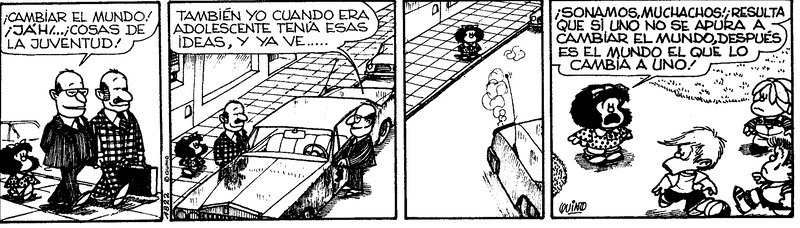
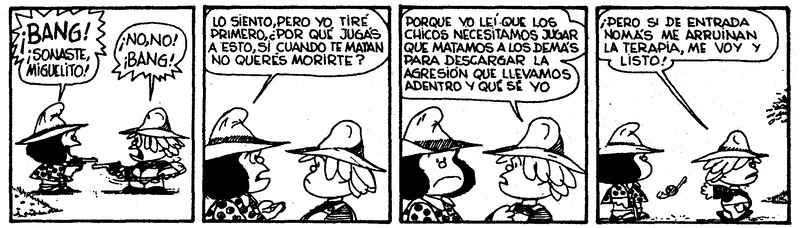
Here are some Mafalda comic-strip examples (authentic productions by native speakers for native speakers) where you can see the use of this word:
Deja una respuesta